


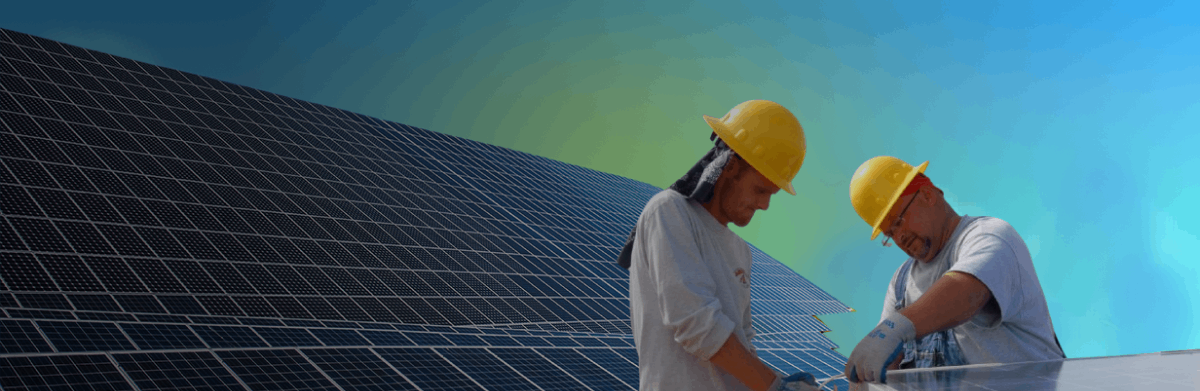
Solar Panel Performance Factors
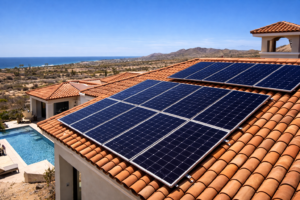
Solar panels convert sunlight into electricity, but several factors influence how much energy a solar system can produce. Understanding solar panel performance factors helps homeowners design systems that generate maximum energy throughout the year.
In regions like Baja California Sur, where sunlight is abundant, proper solar system design ensures high energy production and long-term efficiency.
Sunlight Exposure
The amount of sunlight solar panels receive directly affects energy production. Areas with consistent sunlight, such as Baja California Sur, provide ideal conditions for solar energy systems.
Solar panels produce the most electricity when exposed to direct sunlight without shading from trees, buildings or roof structures.
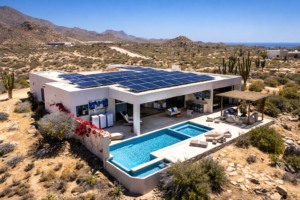
Panel Tilt and Orientation
Solar panel tilt angle and orientation determine how efficiently panels capture sunlight throughout the day. Panels installed at the correct angle receive more sunlight and produce higher energy output.
Professional solar installation considers roof angle and sun path to maximize solar energy production year-round.
Temperature Effects
While solar panels require sunlight to generate electricity, extremely high temperatures can slightly reduce panel efficiency. Modern solar panels are designed to perform well in warm climates such as Baja California Sur.
Monitoring System Performance
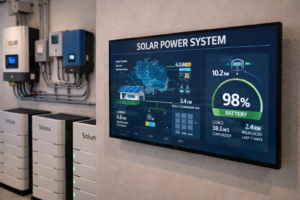
Solar monitoring systems track electricity production in real time. Monitoring tools allow homeowners to see how much energy their solar panels generate and detect performance issues quickly.
Monitoring systems help ensure solar installations continue operating efficiently for many years.
Designing Efficient Solar Systems
Proper solar system design considers all performance factors including sunlight exposure, shading, panel orientation and temperature conditions. Well-designed solar systems produce reliable energy and maximize long-term performance.